

Choosing bangles: size, metal and occasion
Bangles are the one accessory most often bought in the wrong size, because the sizing system is not intuitive and the measurement is easy to take incorrectly. Getting it right takes two minutes and saves a return.
What the size numbers mean
Indian bangle sizes are given in inches of internal diameter — 2.4, 2.6, 2.8 and so on. A 2.6 bangle has an internal diameter of 2.6 inches, roughly 6.6 centimetres. The number is not a circumference and not a wrist measurement, which is where most confusion starts.
The sizes most commonly stocked are 2.4, 2.6 and 2.8, with 2.6 being the most frequently ordered. If you fall between sizes, go up rather than down for rigid bangles — a bangle that will not pass the knuckle is unwearable, while a slightly loose one still sits fine.
Measuring correctly
The measurement that matters is the widest part of your hand with the fingers folded in, not the wrist. Bring your thumb across to the base of your little finger as though slipping a bangle on, then measure around the widest point of that shape with a tape or a strip of paper.
Divide that circumference in centimetres by 3.14 to get the diameter, then divide by 2.54 to convert to inches. A hand circumference of 21 cm gives a diameter of about 6.7 cm, or 2.63 inches — a 2.6 or 2.8 depending on how snug you like them.
- Measure the hand at its widest with the thumb tucked, not the wrist
- Circumference in cm ÷ 3.14 ÷ 2.54 = size in inches
- Between sizes: go up for rigid bangles, down for adjustable ones
Gold-tone, plated and adjustable
Most fashion bangles are brass or alloy with a gold-tone plating. Plating thickness determines how long the finish lasts, and it is worth knowing that perfume, sanitiser and sweat all shorten that life considerably. Putting bangles on last, after perfume has dried, makes a noticeable difference.
One-gram gold plating is a heavier deposit than standard gold tone and holds its colour longer, which is why it costs more. Adjustable or openable designs suit anyone between sizes or with limited hand flexibility, though they are less durable at the hinge.
Choosing by occasion
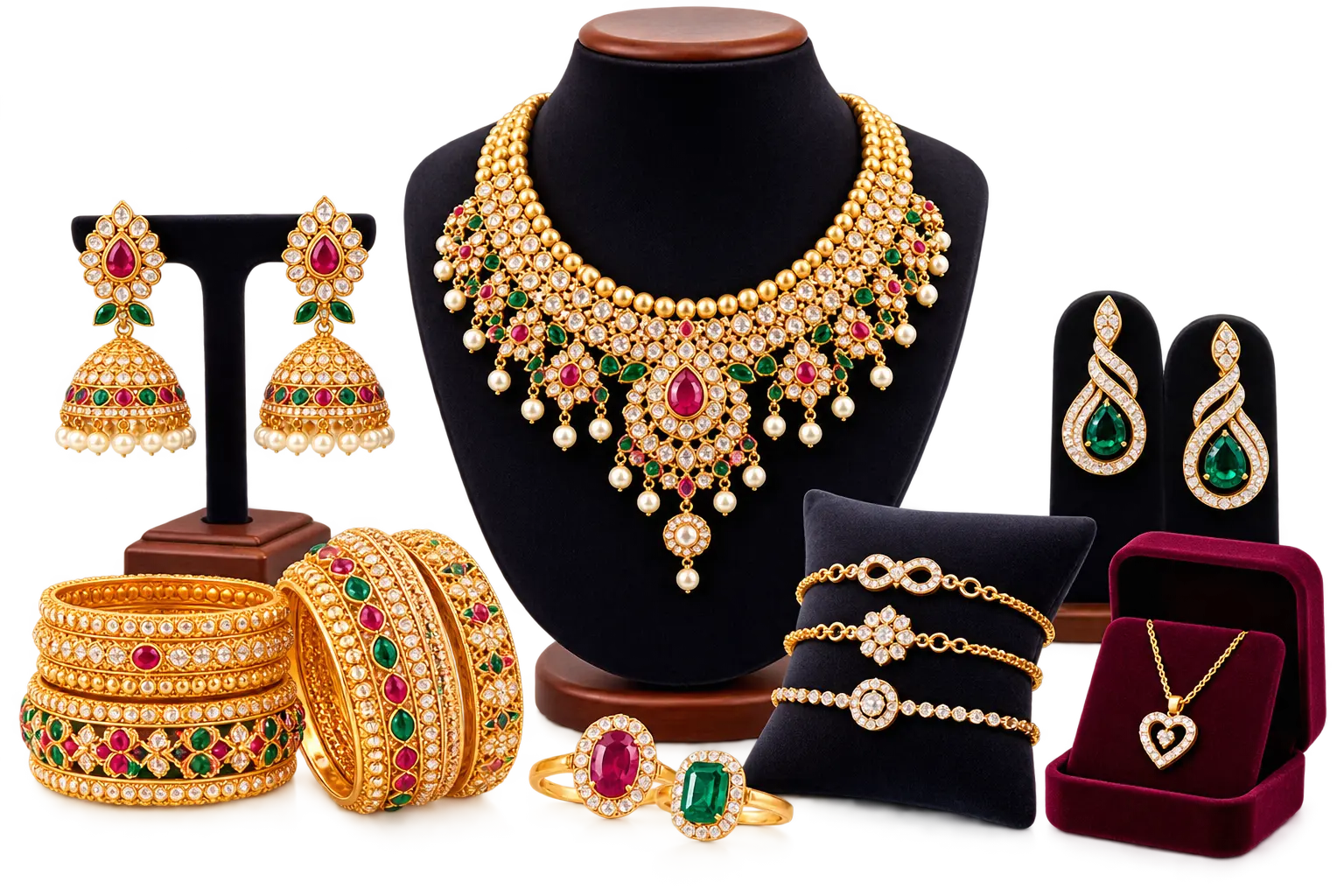
Stone-set and heavily worked bangles read as festive and pair with silk and lehengas. Plain or lightly textured gold-tone bangles work with everything, including western wear, and are the more useful first purchase.
Stacking is a matter of proportion rather than rules: a wider single bangle balances a heavily worked outfit, while several thin ones suit a plain drape. Mixing metals looks deliberate only when one metal clearly dominates.